
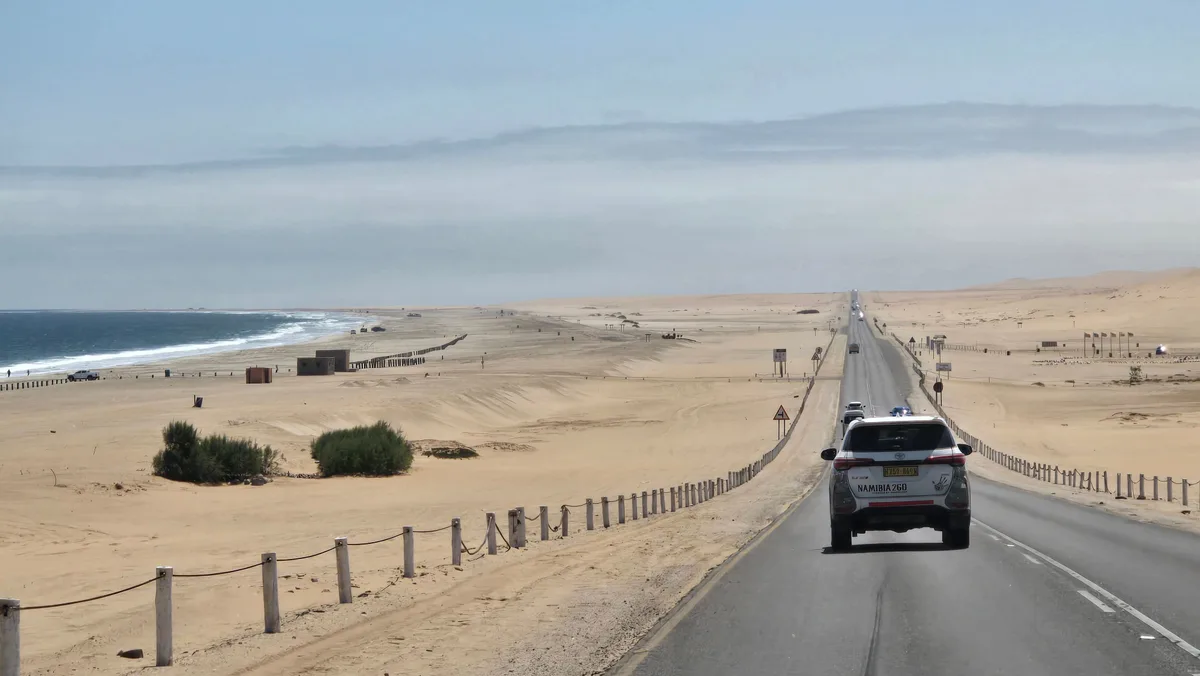
Morning fog drifting over red sand dunes bordering the dry Kuiseb riverbed in Namibia
Desert notebooksNamib-Naukluft

Namibia: First light along the Kuiseb

Where red dunes meet a dry riverbed and fog from the Atlantic keeps an ancient ecosystem alive

By Selma Shikongo · 9 min read · Issue 01
Share on WhatsApp

Before the sun clears the eastern escarpment, the Namib is not dry. A cold Atlantic fog rolls inland along the Kuiseb riverbed, beading on camelthorn thorns and beetle backs alike.

The Kuiseb acts as a quiet border: to the south, a sea of apricot dunes; to the north, gravel plains stretching toward the Skeleton Coast. Every few years, heavy rains in the Khomas Hochland send a brown flash flood down the canyon, reminding the desert that it is still a river valley.

Reading the gravel plains

Travelling slowly here means stopping before ten in the morning. By midday, colour drains into glare; at dawn and after four in the afternoon, every ridge holds deep shadow and stillness.
Field Planning

Plan this journey

Best time to goPeak season
Jan
Feb
Mar
Apr
May
Jun
Jul
Aug
Sep
Oct
Nov
Dec
Getting there
Fly into Windhoek (WDH) or Walvis Bay (WVB). Drive via the C14 gravel pass through the Kuiseb Canyon; a high-clearance 4x4 is recommended (TODO: verify permit office hours in Walvis Bay).
Where to stay
Small stone guesthouses in the Naukluft foothills or community-hosted campsites near the lower Kuiseb.
Costs
Park entry: NAD 150 (approx. USD 8 / BWP 110) per adult per day; small lodge rooms: BWP 2,400–4,100 (approx. USD 180–305) per night (TODO: verify). — prices checked August 2026.
Good to know
Carry at least 5 litres of drinking water per person in the vehicle and check tyre pressures before leaving sealed roads.
Local guides
Topnaar community heritage walks from Gobabeb or Utuseb offer rare insight into !nara melon harvesting.
The Weekly Postcard

One story from Africa, every Sunday.

A place, a person and one practical tip, in three minutes. Free, and easy to leave.